Carbohydrate Ratios In Sports Nutrition
Ever wondered what those 2:1 or 1:0.8 carbohydrate ratios on sports nutrition labels actually mean? Knowing how to fuel with the right carb mix can unlock better energy, smoother digestion and stronger endurance. From the classic 2:1 glucose-to-fructose ratio to the next-generation 1:0.8 formula, along with gut-friendly cyclic dextrin and hydrogel systems, this guide breaks down the science behind smarter fuelling so you can power through long runs, tough rides and ultra-endurance events without hitting the wall.
Table of Contents
-
Why Carbohydrate Type & Ratio Matter in Sports Performance
-
The Classic 2:1 Glucose to Fructose Ratio: What the Research Says
-
1:0.8 Maltodextrin to Fructose: The Next Generation Formula
-
Beyond Ratios: Innovative Carbohydrate Technologies (Cyclic Dextrin & Hydrogel Fuelling)
-
Key Points: Matching Carb Ratios to Your Needs
Why Carbohydrate Type & Ratio Matter
-
Carbohydrate metabolism → Carbohydrates are broken down into simple sugars (glucose, fructose, galactose), which are absorbed in the small intestine and used for energy or stored as glycogen in muscles and liver (1).
-
Absorption limits → The small intestine can only absorb a limited amount of sugars at a time. Glucose uses SGLT1 and fructose uses GLUT5, and absorption rates depend on the mix of sugars and transporter capacity (2).
-
Combining simple sugars → Eating both glucose and fructose together helps your body absorb more carbs during exercise, giving you more energy without upsetting your stomach (3).
-
Gut Tolerability → Eating more sugar than your small intestine can absorb can upset your stomach, causing bloating, gas or diarrhoea (4).
The Classic 2:1 Glucose/Maltodextrin To Fructose Ratio
-
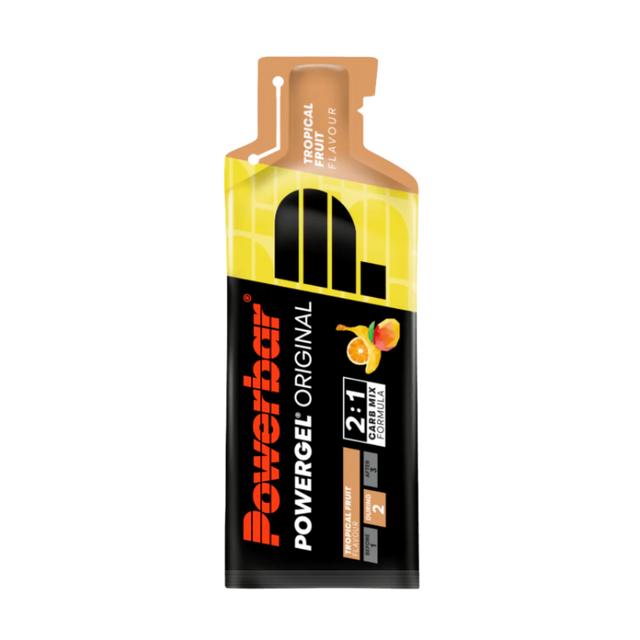
A 2:1 ratio in a sports nutrition product refers to two parts glucose or maltodextrin for every one part fructose.
-
Dual Transport System→ Uses both SGLT1 (for glucose) and GLUT5 (for fructose) which allows you to absorb 60-90g of carbs per hour during exercise, giving more energy without upsetting your stomach (3,4,7,8,10).
-
Gut Tolerance→ Carbohydrate mixes that use a glucose-to-fructose blend (2:1 or 1:0.8 above 60g/hour) have been shown to enhance absorption and lower the risk of gut discomfort (5,6,7,10).
-
Higher Carb Intake→ Some research suggests trained athletes can tolerate up to 120g/h with multi-sugar combinations, but this should be approached gradually.
-
Widely Available→ Many sports drinks, gels and energy products for endurance athletes are formulated around this 2:1 ratio to balance energy delivery and gut comfort.
Aid Station 2:1 Products
→ Precision Fuel & Hydration PF 30 Energy Gel
→ Infinit Nutrition Premium Fuel 90 Sachet
1:0.8 Maltodextrin to Fructose: The Next Generation Formula
-
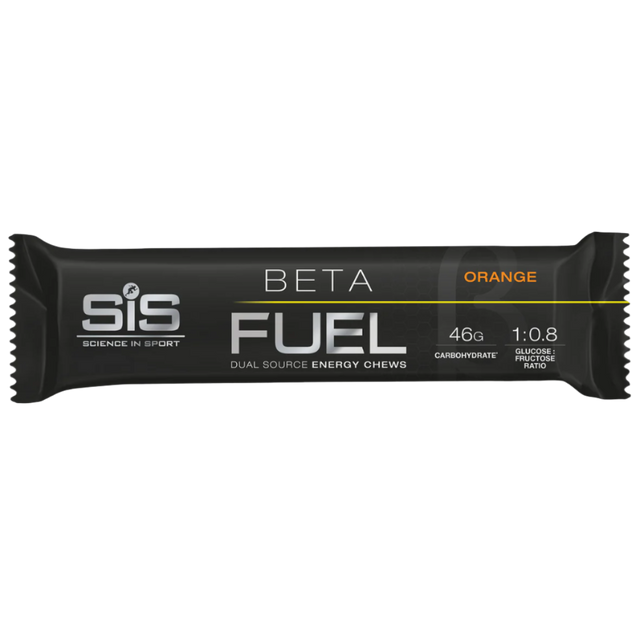
A 1:0.8 ratio in a sports nutrition product refers to one part glucose or maltodextrin for every 0.8 parts fructose
-
Current research has shifted from a 2:1 to a 1:0.8 glucose-to-fructose ratio as evidence showed it improves carbohydrate oxidation and gut tolerance at higher intakes (7,9,10).
-
Intakes above 90g/hour may benefit from a 1:0.8 glucose-to-fructose mix to enhance absorption and reduce gut discomfort (7,10).
-
In ultra-endurance events, intakes up to 120g/hour may help when glycogen is fully depleted (8,9) but higher intake does not spare glycogen.
-
Higher carbohydrate intake can also increase the risk of flavour fatigue.
Some Aid Station products use a 1:0.8 glucose (or maltodextrin) to fructose ratio.
→ Science In Sport (SIS) Beta Fuel Drink Mix
→ Carbs Fuel Sport Drink Mix Sachet
→ Styrkr Dual-Carb Energy Drink Mix
→ Science In Sport (SIS) Beta Fuel Energy Chew
→ Styrkr Gel50 Dual-Carb Energy Gel
Beyond Ratios: Innovative Carbohydrate Technologies (Cyclic Dextrin & Hydrogel Fuelling)
-
Cluster Dextrin (Highly Branched Cyclic Dextrin) → A slow-digesting carbohydrate that provides steady energy release with minimal stomach discomfort.
-
Hydrogel Technology (e.g. Maurten)→ Encapsulates carbohydrates in a gel matrix, allowing faster gastric emptying and smoother absorption in the intestine.
-
Performance Advantage → Both technologies improve tolerance of high carbohydrate intakes (90-120g/h) by reducing gut distress during endurance exercise.
-
Practical Use → Ideal for athletes, especially those with gut sensitivity or using higher carbohydrate intakes per hour, seeking sustained energy and comfort in long-duration or high-intensity events.
Key Points: Matching Carb Ratios to Your Needs
-
2:1 Ratio → Best for carbohydrate intakes under 60g per hour.
-
1:0.8 Ratio → Suitable for all intakes, especially above 90g per hour.
-
Hydrogel & Cluster Dextrin → Ideal for athletes with sensitive guts or those needing high carb intake tolerance.
-
Test in Training → Always trial different products and ratios during training to find what your gut and performance respond to best.
Ash Miller
Dietitian and Nutritionist (Masters)
Bachelor of Physical and Health Education
Instagram: @ashthomo_nutrition
References:
-
OpenStax College. Digestion and absorption of carbohydrates. In: Human Nutrition. [Internet]. 2023 [cited 2025 Oct 21]. Available from: https://pressbooks.bccampus.ca/humannutrition/chapter/digestion-and-absorption-of-carbohydrates/
-
Liu Y, Wang Y, Zhang L, et al. Intestinal fructose absorption: modulation and relation to human health. Trends in Food Science & Technology. 2020;99:1–10. Available from: https://www.sciencedirect.com/science/article/pii/S2213434420300608
-
Dietetics Academy. How carbohydrates are absorbed: active vs. passive transport. [Internet]. 2025 Jan 10 [cited 2025 Oct 21]. Available from: https://dietetics.academy/nutritional-biochemistry/how-carbohydrates-absorbed-active-passive/
-
Sullivan SN, McCallum RW. Ability of the normal human small intestine to absorb fructose. Clin Gastroenterol Hepatol. 2007;5(3):358-364. Available from: https://www.cghjournal.org/article/S1542-3565(07)00449-1/fulltext
-
Virbay, T., et al. (2020). Effects of 120 g/h of Carbohydrates Intake during a Mountain Marathon on Exercise Load and Exercise-Induced Muscle Damage Markers. Nutrients, 12(5), 1367.
-
Müller, M., et al. (2020). Effects of 120 g/h of Carbohydrates Intake during a Mountain Marathon. Nutrients, 12(5), 1367. https://doi.org/10.3390/nu12051367
-
Jeukendrup AE. The optimal carbohydrate intake during exercise. Sports Med. 2010;40(6):499–511.
-
Burke LM et al. Carbohydrates for training and competition. J Sports Sci. 2011;29(Suppl 1):S17–27.
-
Rollo I, Gonzalez JT, Fuchs CJ, van Loon LJ, Williams C. Carbohydrate supplementation and endurance performance: a systematic review. Sports Med. 2020;50(Suppl 1):3–23.
-
Podlogar T., Bokal Š., Cirnski S., & Wallis G. A. Increased exogenous but unaltered endogenous carbohydrate oxidation with combined fructose-maltodextrin ingested at 120 g h-1 versus 90 g h-1 at different ratios. Eur J Appl Physiol. 2022;122:2393–2401.
Disclaimer:
The content in this blog is for general information only and is not a substitute for professional medical advice, diagnosis, or treatment. Always speak with your doctor or allied health team before changing your diet, exercise, or taking supplements, especially if you have a health condition or take medication. Please use this information as a guide only. Aid Station doesn't take responsibility for individual outcomes.